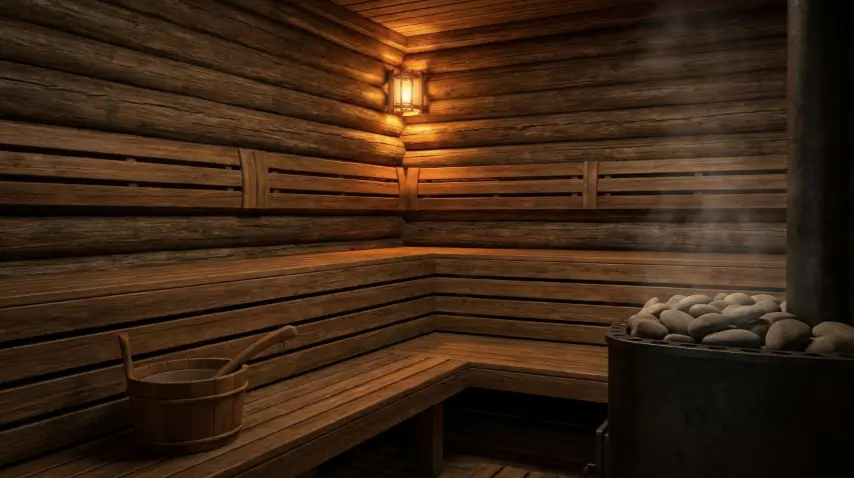

A traditional cedar or hemlock cabin typically costs $3,500 to $9,000 for the unit alone, plus $500 to $2,500 for electrical and foundation work, while a comparable infrared unit runs $1,800 to $5,500 with lighter installation needs since many plug into a standard household outlet. The upfront gap favors infrared, but traditional saunas run at 170 to 195 degrees Fahrenheit versus 120 to 150 for most infrared cabins, which changes both the experience and the long-term math depending on how the household actually plans to use it.
What Does the Unit Itself Cost?
A two- to four-person traditional cabin with kiln-dried paneling, benches, an electric heater, and a set of sauna stones generally lands between $3,500 and $9,000 depending on wood species and cabin size, with cedar models running toward the top of that range and heat-treated hemlock kits toward the bottom. Infrared cabins of similar footprint, built around carbon or ceramic heating panels instead of a stove, typically run $1,800 to $5,500, since they use less wood, no stones, and a simpler heating element.
What Does Installation Add?
Most electric traditional heaters above 6 kW require a dedicated 240-volt circuit, often 30 to 50 amps, which means running new wiring from the panel if one is not already in place, typically $500 to $1,800 depending on distance and whether a permit and inspection are required locally. Many infrared units draw far less power and plug into a standard 120-volt 15-amp outlet, which can mean zero electrical work beyond an existing outlet, though larger infrared cabins with multiple panel zones sometimes still need a dedicated circuit.
What Does Each Cost to Run Every Month?
Traditional heaters draw more power to reach and hold a higher temperature, and a typical 6 kW heater run for 20 to 30 minutes several times a week adds roughly $15 to $35 a month to a power bill at average residential electricity rates. Infrared panels use less wattage and heat a lower target temperature, usually landing at $8 to $20 a month for similar frequency of use. Neither cost is large in the context of total ownership, but it is a real, recurring difference worth factoring into a monthly budget.
How Much Space Does Each Actually Need?
A traditional cabin needs clearance around the stove, typically 6 to 12 inches from combustible surfaces per manufacturer specifications, plus enough ceiling height, generally at least seven feet, for the heat to stratify properly between the lower and upper benches. Infrared units skip the stove entirely and can often fit in a shorter, more compact footprint, which is part of why they show up more often in basements, spare bedrooms, and other indoor spaces with tighter dimensions than a dedicated outdoor structure allows.
How Do Heat-Up Time and Session Length Compare?
A traditional sauna generally takes 30 to 45 minutes to reach full temperature, longer in cold weather, and sessions run 15 to 20 minutes at high heat with the option of ladling water on the stones for a burst of steam. Infrared cabins heat faster, often 10 to 15 minutes to a usable temperature, and sessions tend to run longer, sometimes 30 to 45 minutes, since the lower ambient heat is easier to tolerate for an extended sit. Which pattern fits better depends on whether a household values a shorter, more intense session or a longer, gentler one.
What Do Warranty and Lifespan Differences Look Like?
Traditional sauna heaters commonly carry warranties in the one to five year range on the heating element, with the cabin structure itself, if kiln-dried wood and properly sealed, easily lasting fifteen to twenty-five years with the basic upkeep described above. Infrared panels typically carry similar or slightly longer warranties, often three to seven years, since there are fewer moving parts to fail, but individual panels can degrade in output over a decade of heavy use in a way a simple electric stove element generally does not. Neither option has a dramatically shorter working life than the other; the practical difference is more about what fails first and how cheap that specific part is to replace.
Which Experience Do People Actually Prefer Long-Term?
Owners who grew up with or have used a Finnish-style sauna tend to stick with traditional heat because the higher temperature, steam from water on the stones, and the ritual of the stove are part of what they associate with the experience itself, not just the health angle. Infrared converts are often people who found traditional heat too intense or too slow to justify the wait, and who value being able to read or work through a longer, gentler session. Trying both, where possible, before committing is the single best way to know which one a household will actually keep using years down the line rather than let sit unused after the novelty fades.
See also: Cloud Technology for Businesses
What About Resale or Long-Term Property Value?
Neither a traditional nor an infrared sauna reliably adds resale value dollar for dollar with what it cost to install, the way a kitchen remodel might, though a well-built cabin in good condition is a mild selling point for buyers already interested in wellness features. A permanent, well-installed traditional cabin with a proper foundation tends to read as a more substantial, higher-quality improvement to prospective buyers than a smaller plug-in infrared unit that could just as easily be unplugged and taken with the seller. That perception difference is worth factoring in for anyone who expects to sell the property within the sauna’s useful lifespan, even though it should not be the deciding factor for a household planning to stay long-term.
Which Wins on Long-Term Cost of Ownership?
Over a ten-year span, the higher upfront cost of a traditional cabin is partly offset by generally simpler long-term maintenance, since there is no electronic panel array to replace and stone or seal replacement is inexpensive. For a household set on the classic high-heat, stove-and-stones experience rather than a lower-temperature alternative, a traditional cabin remains the more direct match even with the higher initial spend. Current traditional cabin pricing across sizes and wood species is worth comparing side by side through Sweat Decks before deciding between the two heating styles.
Frequently Asked Questions
Is a traditional sauna more expensive than an infrared sauna? The unit usually costs more, roughly $3,500 to $9,000 versus $1,800 to $5,500 for infrared, but the gap narrows once installation and years of operating cost are factored in.
Does a traditional sauna need a dedicated electrical circuit? Most electric heaters above 6 kW need a dedicated 240-volt circuit, often 30 to 50 amps, while many infrared units plug into a standard 120-volt 15-amp outlet.
Which costs more to run each month? Traditional saunas typically cost more per session since they heat to a higher temperature over a longer heat-up period, though the monthly difference is usually modest.
Which takes up less space? Infrared units generally have a smaller footprint since they skip stove clearance and the ceiling height needed for heat stratification.
References
- Association between sauna bathing and fatal cardiovascular and all-cause mortality events, JAMA Internal Medicine, 2015
- Joint associations of sauna bathing and cardiorespiratory fitness on cardiovascular and all-cause mortality risk: a long-term prospective cohort study, Annals of Medicine, 2018
- Short-term effects of Finnish sauna bathing on blood-based markers of cardiovascular function in non-naive sauna users, Heart and Vessels, 2018
By Owen Baxter



 By
By